

I almost didn’t start EmmaLou Fishing.
That probably sounds strange to anyone who’s only known me through the page itself, the photos from fishing events, the days on the water, the Saratoga tagging trips, the odd video here and there. It looks like it came easily… it didn’t.
When I set up the EmmaLou Fishing Facebook and Instagram pages in September 2023, I wasn’t thinking about algorithms or follower counts. I wasn’t trying to build a brand. To be honest, I was trying to convince myself I belonged there at all.
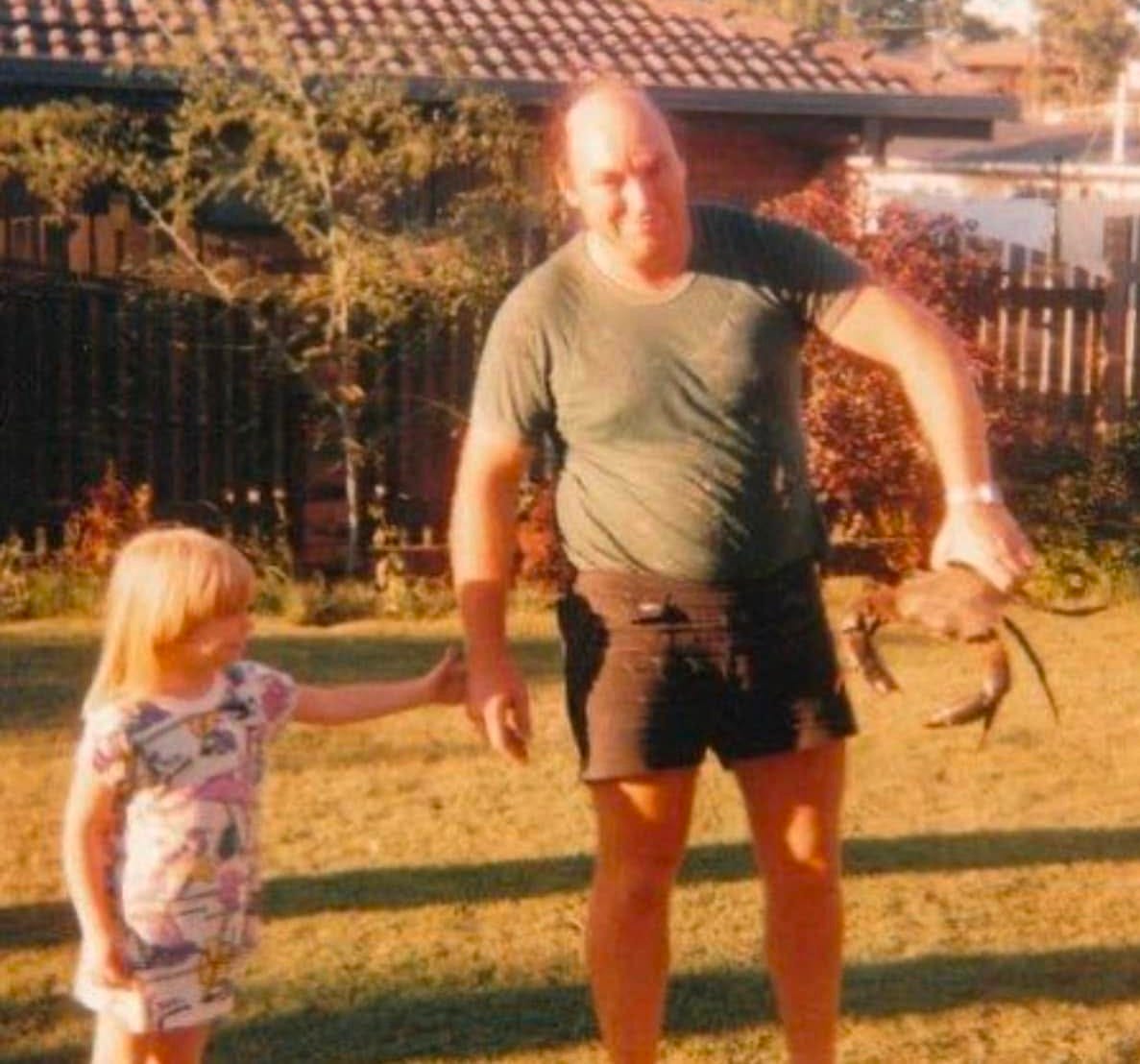
My first post wasn’t even a photo of me. It was a photo of my dad.
At the time I didn’t really know why. Now I do. His story felt easier to tell than mine.
Dad is where my fishing journey started, as a little girl in Pumicestone Passage. He taught me that if you were on the boat, you were part of the team. He introduced me to fish tagging before I understood the words citizen science. He taught me that fishing wasn’t only about catching fish, it was about respecting the water, looking after what you caught, and sharing the experience with the people around you. For a long time, telling his story felt like the safer version of telling mine.
I’d looked at women in fishing on social media for years before that, and mostly what I found was uncomfortable. Bikini-clad women. Enormous barra held up like trophies. Feed after feed of the same polished image, the kind fishing magazines had been running for decades before Instagram existed. I convinced myself it wasn’t for me, and for a while I left it at that.
Then I started wondering whether I only felt that way because I didn’t fit the mould. Was I judging something I simply couldn’t be part of?
No. It had always sat wrong with me, mould or no mould. I don’t think less of the women who choose to share themselves that way, everyone’s entitled to tell their story however they want. It just wasn’t mine. I didn’t want to be attractive before I was respected as an angler. I didn’t want the fish to become a prop, or myself to become something people looked at rather than listened to. I needed fishing to feel equal. Women aren’t there to be ogled at, any more than men are.
So instead of asking whether there was another way to do this, I simply decided social media probably wasn’t for someone like me.
That stuck for a while, until I started following Kymmy Adams, the Women’s Recreational Fishing League Queensland chapter president, and her page called Lady Anglers Downunder. What I saw wasn’t how many people followed it, it was how different the women in it were from each other: spearfishing, fly fishing, offshore trips, family days on the water, every kind of fishing you could think of. Some pages were polished, tile after tile arranged so the fish practically lined up, big fish, big fish, big fish. Others just posted whatever suited them that day. The bikini pages were still there too, and I’d stopped minding, each to their own. What actually mattered was realising it wasn’t the only way in. I remember thinking, you know what, why not, though it took a while for that to turn into anything.
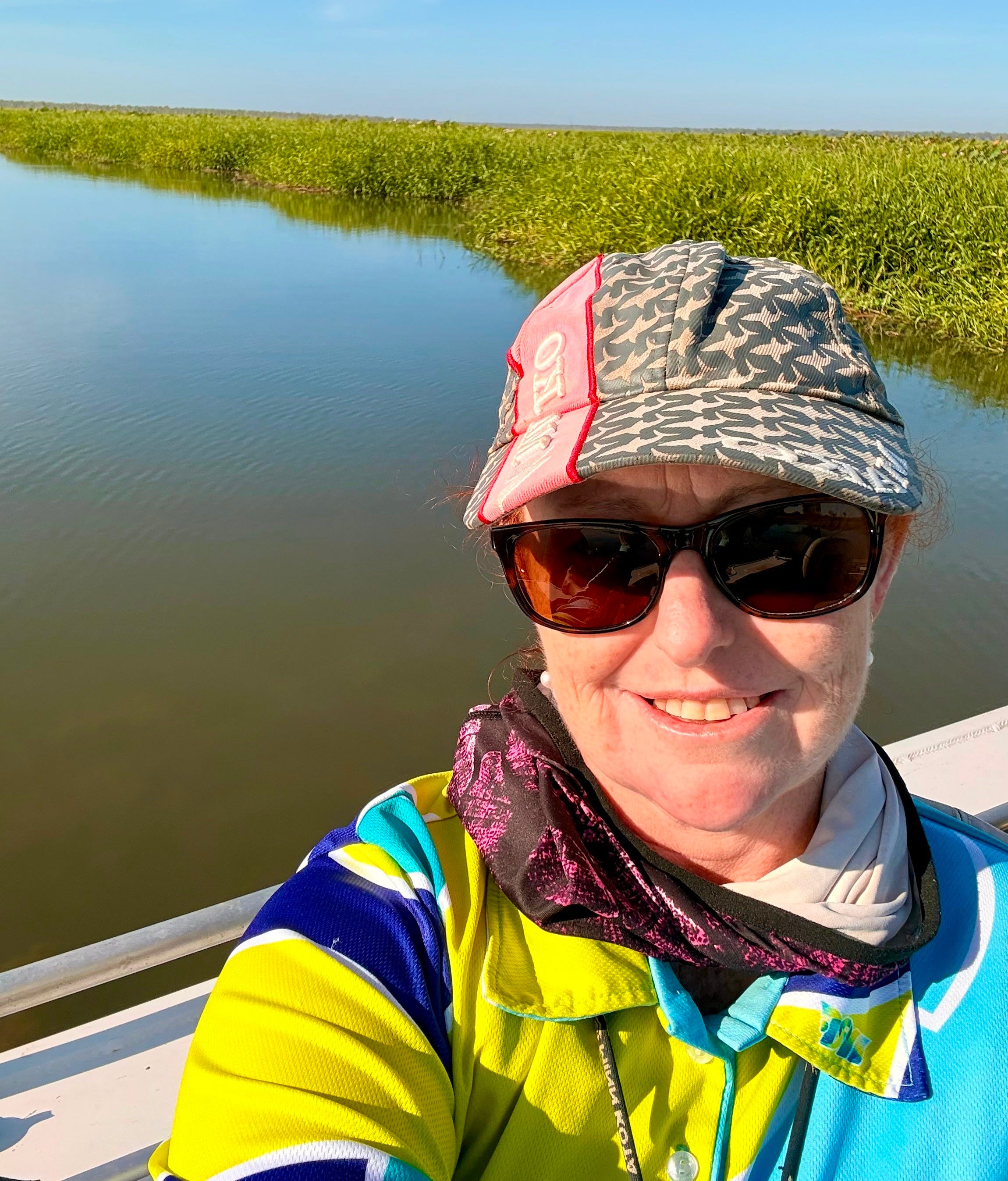
It’s strange how a belief becomes true if you leave it unexamined long enough. I’d grown up fishing, ran events, contributed to citizen science research, competed and won, and become confident enough to fish alone, much to a lot of people’s horror. None of that felt like it was enough. There was always someone who knew more, someone who’d caught a bigger fish, someone with more experience, someone who looked more polished on camera, and somewhere along the way I’d started measuring myself against people I was never actually trying to become.
Some of that came from a team I fished with for years, back when I still believed you needed someone else’s authority before your own experience counted for anything. It felt like you needed to be a professional before you were allowed to contribute. We were confident enough to compete and win. We were strangely reluctant to believe we had any right to be seen doing it. It wasn’t said outright, mostly it came sideways, in jokes and offhand comments and the odd flat “what are you doing” when a camera came out. People like us don’t put our faces on camera. People like us stay away from the media boat. People like us don’t put ourselves on social media. Enough of that, and it stops being something other people say and starts being something you say to yourself. That’s not us. We don’t do that.
We’re good enough to win tournaments, but we’re not good enough to put ourselves on social media.
The strangest part was that the same environment that produced those lines also believed we were good enough to win. We’re good enough to win tournaments, but we’re not good enough to put ourselves on social media. I don’t think anyone meant that as a contradiction. I’m not even sure they’d have agreed it was one. But it sat with me for quite some time, that you could be allowed to be capable and not allowed to be visible, as if those were two separate permissions and only one of them was yours to have.
When I finally created EmmaLou Fishing, the fear wasn’t really about strangers. It was about people who already knew me. Imposter syndrome crept in. I could hear the conversations before they’d even happened. What’s Emma doing? Who does she think she is? Some of that was probably real. Some of it was probably only ever in my head, and I still don’t know which was which. For most of that first year I told myself people would say what they were going to say, and I couldn’t do much about that. What I could do was ignore it rather than argue with it, I didn’t need to accept anyone’s judgement as valid, only to stop letting it run the show. It’s none of anyone else’s business, in the end. I decided the only thing to do was smile, wave, and keep posting.
The shift, when it came, wasn’t dramatic. In February 2024 I was asked to speak to a group of women about fish tagging and citizen science. I expected polite interest and a couple of questions. What I got was real curiosity. How did you get started? What have you learnt? How would you approach this? They wanted my experience, not my credentials, and by the end of that session I felt something I hadn’t expected to feel: useful.
I wasn’t looking for permission. I was looking for evidence, and that room gave it to me. Evidence that what I knew had value beyond myself, that the things I’d picked up through decades of fishing, mistakes, questions and simply turning up were worth sharing.
Maybe that’s true for other women too. Maybe none of us are looking for permission. Maybe we’re all just looking for evidence that we’re allowed to take up the space.
The term influencer doesn’t sit right with me, partly because I think most of us carry some version of imposter syndrome and I’m no exception. It makes me think of curated feeds and lives edited for perfection, which has never been what my page is. But if it means connecting with the right people at the right point in time, giving someone a bit of evidence they can step up or step out, then I can live with that.
Most of it comes down to not being a taker. If someone asks me what lure I’d use, I tell them. I’m not precious about what I know, I’d rather pass it on than sit on it. I want to see people catch fish and get their personal best. I’m not worried about someone becoming bigger or better or more successful off the back of something I shared, honestly I’d prefer it. My page was never built on look at me. It’s always been built on this might actually help someone.
That’s not always a comfortable line to walk, though. There are still plenty of times I look back through something I’ve posted and think it feels a bit look at me-ish, and I’ll take it down, or decide not to post it in the first place. Other times I push through the discomfort anyway. I don’t think that tension has gone away just because the page has grown a little. I’m still working out the difference between sharing because it might help someone and sharing because I want to be seen, and I’m not sure that’s a line you get to draw once and be done with.
Over the past year or so, that’s also what pulled me toward writing rather than just posting photos, trying to put into words what I do, what I’ve learnt, what actually happens out there, not just the highlight. Somewhere out there are women standing exactly where I was in September 2023, and I’d like to think a few of them read something here and feel like they’re allowed to step out of the shadows too.
These days, I measure success by the messages, not the followers. Where can I take my daughter fishing? I’ve been thinking about entering Barra Nationals but I’m worried, am I even good enough? How do you’re reverse a trailer? What knot would you use here? My value isn’t measured in likes, it’s measured in whether I can hand someone my own experience and knowledge and let them see they’ve got this too.
It’s not always about the big fish. It’s about the journey.
Show us what it’s like to fish with kids, including the bit where half of us are terrified about the logistics before we’ve even left the driveway. Show us you reversing the trailer. Show us you’re tying knots. Write about how the tournament actually went, not just the highlight reel. Ask questions, have an opinion, have a voice. Everyone belongs in this space, not because they’ve proven themselves first, but because showing up is most of it.
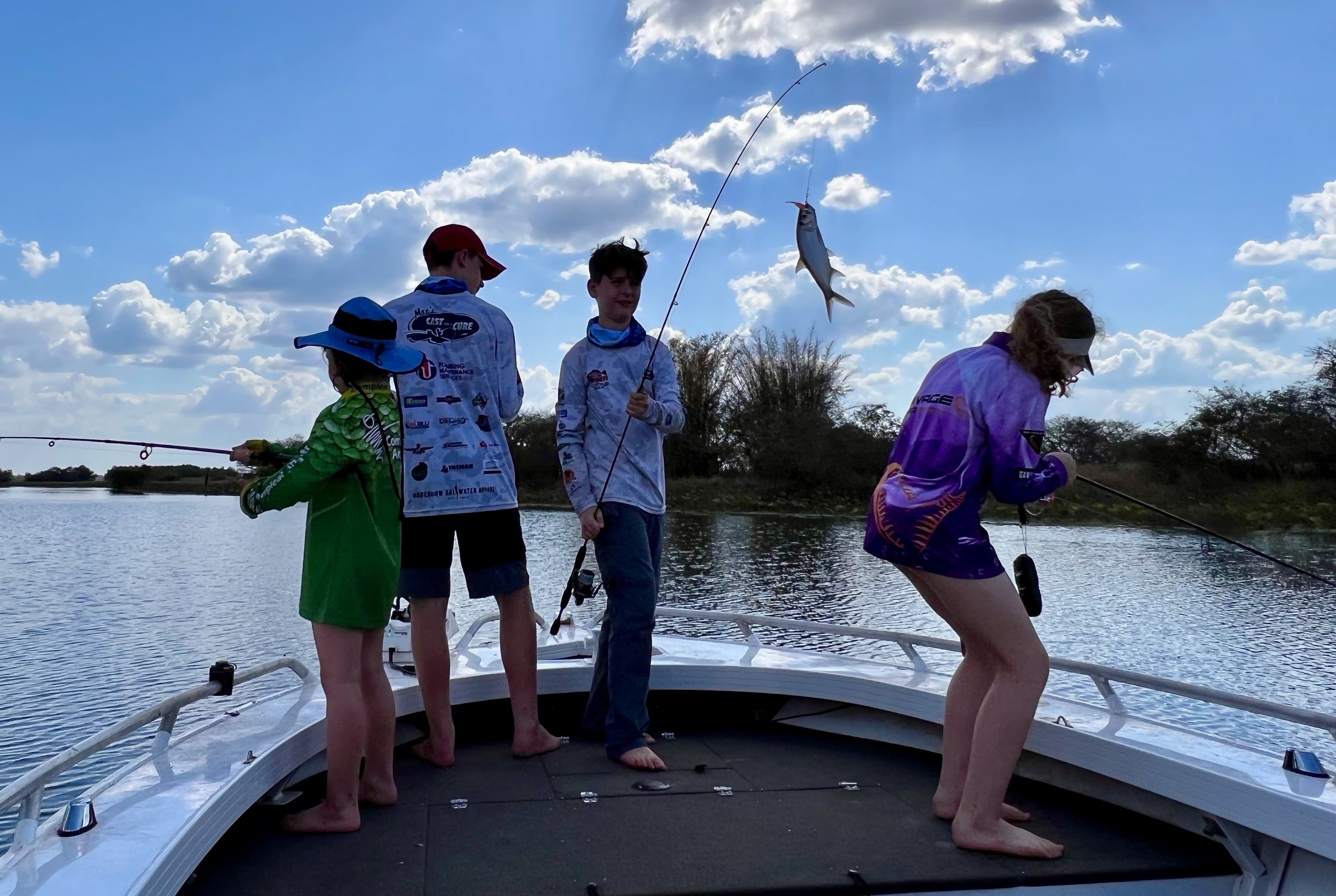
I don’t think EmmaLou Fishing was ever trying to make anyone an expert. I think it’s been quietly collecting evidence the whole time, evidence that ordinary women can fish, learn, ask questions, reverse boats, raise kids on the water, run events, and still be figuring it out as they go.
If I could sit beside the woman who hovered over the Post button back in September 2023, I don’t think I’d tell her anything. I’d just show her the photo of Dad again, the one she almost didn’t post, and let her work out for herself that it was never really about him at all. It was about learning that her own story was allowed to follow.
Come find me on Facebook and Instagram too.
If any part of this felt familiar, I’d genuinely like to hear about it in the comments, that’s kind of the whole point of writing it down.
And if it’s worth passing on, restacking or sharing it is how other women end up finding their way to this page too.